

Should money be passed down before or after death?
The biggest inheritance decision may not be who gets the wealth, but when they get it


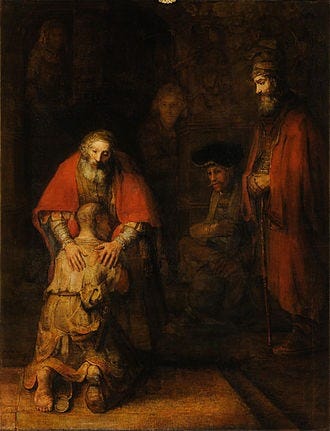
If you’re in a position to give or receive an inheritance, one of the biggest decisions is when the optimal time for a wealth transfer is—before or after death? Both choices have meaningful advantages and disadvantages, and the right choice varies depending on your financial situation, family dynamics, and where you are in life.
In the United States, we are on the verge of one of the largest intergenerational wealth transfers in history. An estimated $105 trillion is expected to pass from Baby Boomers to their heirs by 2048. The question of what to do with a lifetime of accumulated wealth—and when—is no longer a distant hypothetical for millions of families. It’s happening right now. And most people are navigating it without a map.
Regardless of the value, since not everyone has wealth to pass down, even a small amount can make a difference. And the timing of wealth transfer is one of the most consequential and least discussed decisions families face. It’s not a financial matter. It’s a question about trust, control, love, and what we believe money is actually for.
To answer the question of when to transfer wealth, I (Maura), a death doula and founder of Hello Mortal, teamed up with Lori Zager, an investment advisor, wealth manager, and co-founder of 2X Wealth Group, who has over 30 years of experience in finance, to help you think through what this means for your situation.
The reason we do this work and how we found each other is personal. We are two women who have lived on both sides of this conversation. My mother died when I was 20. And nearly nine years ago, Lori’s husband died, which changed everything for her and their girls.
Our losses were different, but the territory was familiar: the decisions made under grief, the things we wished had been handled differently, the love we are grateful for, and the many challenges we faced. We found ourselves in the same conversation, coming from different directions. Me from the child’s perspective. Her from the spouses’ and mothers’. We thought it would be helpful for people to see both points of view.
The case for transferring wealth before death
Lori’s perspective:
There are both emotional and motivational reasons to give money while you are alive. This is true for parents, grandparents, aunts, uncles, and nonpartnered individuals. Many want to help children buy housing, fund education, support retirement planning, or pay for childcare so a career can continue. Others may want to help a child/relative/friend start a business or contribute to a charity that reflects their values. Seeing the benefits of your gifts while you are alive can be a source of great pleasure.
Giving assets earlier rather than after you die can have powerful financial benefits for the recipient. It allows money to grow for longer in the beneficiary’s hands, giving it more time to compound. Every year the recipient earns interest on both your initial money and the accumulated interest from previous periods. Einstein called compound interest the eighth wonder of the world.
If you are fortunate enough to have assets likely to go above the estate tax exemption, getting a highly appreciating asset out of your estate before you die can help you avoid estate taxes. Under current law, estates over $15 million must pay a federal estate tax of 40%. Depending on where you live, you may also be subject to state estate taxes, which can have lower minimums and are in addition to those paid at the federal level.
Transferring wealth during life can also serve as a kind of teaching tool. A gift can become an opportunity to show children how to invest, save, and build financial independence.
We first talked to our daughters about investing when they graduated from high school. We showed them the money we had saved for them to go to college. So it was natural for me, when my husband died, to share my financial picture with my two children. Our assets were in a variety of trusts and I explained the purpose of each vehicle. When my younger daughter went back to get a graduate degree, I decided to pay for it directly. I was able to give her money in addition to paying for school so that she could live independently and focus on studying. I gave a similar amount to my older daughter. I am fortunate to have a financial background so I understood how much they would benefit from getting the money now and being debt free. It gave me great pleasure to be able to help them get started, but without compromising my own well-being.
Maura’s perspective:
For some, discussing money is just as taboo as discussing death, which also makes it just as important to talk about.
Having a conversation about money and inheritance before death provides a fuller perspective. Say you’re the one giving away your wealth, discussing this with the person you are passing the money on to enables you to know what they may need help with right now—a down payment on a house, repaying student loans, childcare. Having this discussion leads to intentionality. Because money given with purpose has a different meaning than money given out of obligation, guilt, or default. And it creates an opportunity to talk about how to invest it, protect it, and make it grow. That’s a gift with a much longer shelf life than the dollar amount.
Giving while alive also means the gifter and the giftee get to share in the gift. Like if someone helps a loved one buy a house, they’ll likely want to visit and make memories in that home. And if it’s far from family, that could be the difference between having space big enough to host and seeing each other multiple times a year, versus not.
If there is a shared inherited asset waiting in the wings—a vacation home, a piece of land, a family business—dealing with it now can make all the difference. I’ve watched families fracture over far less. A disagreement about whether to keep or sell a beach house is not what anyone needs after someone they love just died. Surface the conflict early, and both parties can make a different decision. The fight that would have happened after death doesn’t have to happen at all.
The case for transferring wealth after death
Lori’s perspective:
Not everyone wants to transfer wealth early. They may prefer to wait because they want to preserve their own financial independence and avoid the risk of running out of money. For them, keeping control until death feels safer and more responsible.
Some parents don’t like to talk about money with their children. They fear money discussions will demotivate their kids, and take away the satisfaction of building their own success. Further, people may worry that money given too soon could be spent unwisely, lost in a bad marriage, or tied up in a poor business partnership.
Tax treatment can be an important factor in your decision making. If you wait to give appreciated securities or real estate until after you die, the recipients get a stepped-up cost basis. When the recipients go to sell the inherited assets, they pay taxes based on a value on your date of death rather than what the asset originally cost. While the idea of a stepped-up cost basis is appealing as a tax saving strategy, it may not be worthwhile if the money would better benefit someone today, or if your assets will likely be subject to estate taxes.
In many families, the timing of wealth transfer becomes a balance between generosity and caution, trust and protection, teaching and restraint.
Maura’s perspective:
As children, we want our parents to have enough money to take care of themselves. And only they know what their finances actually look like, and what makes sense to give now vs. later. And that runway may be longer than we anticipate. Americans are living longer than any previous generation, which means the financial cushion required is also larger than most people plan for.
For many aging parents, their wealth is also their last meaningful form of independence and agency—their ability to have control over something, at a time when they're navigating physical changes and watching their social circle shrink. Taking that away prematurely, even with the best intentions, can be psychologically damaging in ways that don't show up on a balance sheet. There's a difference between someone who chooses to give and someone who feels pressured to.
In some cases, the beneficiary simply isn’t ready to receive wealth. Financial maturity, emotional stability, and basic literacy about money aren’t guaranteed at any age. And a large sum arriving at the wrong moment can do more damage than good. There’s no shame in acknowledging that about yourself, or about someone you love. If you’re planning to transfer after death, a trust (a legal arrangement that lets you pass assets to someone while controlling the terms) can build in guardrails—such as a minimum age, a specific milestone, or a condition—so the timing isn’t left to chance or circumstance.
When my mother died, I was 20 years old, I was grieving, and I was not okay. If I had come into a significant amount of money at that moment, I would have spent it irresponsibly. What I did receive was a modest inherited IRA that requires minimum distributions each year, but I can’t access it further without penalty until retirement age. While I sometimes wish I could access the money now, in hindsight, that was a good move. Since my mother died, the law has changed. Anyone currently receiving an inherited IRA has to withdraw all of it within ten years and pay the taxes.
How to think through the logistics
If you are in a position where you are giving away money, assessing what you have and what you can give is the first step. Then you can figure out how and when to do it.
A certified financial planner is trained to help you understand your total financial picture, gathering information about the value of your assets today and what they may be worth in the future.
An estate attorney will help you draft documents such as a will, durable powers of attorney, and health care directives. They can also set up a variety of trusts depending on your situation.
A death doula can help you think through how to have conversations with the people you’re going to leave gifts to. They can also help you create and pass on something more valuable than money, such as an ethical will.
The question underneath the question
At some point, the question of when to transfer wealth stops being about money and starts being about accepting the reality of your mortality.
You don’t have a choice about dying, but you do have a choice about when to transfer wealth. And the people who make it intentionally—who sit down and actually ask themselves what they want their money to do, and when, and for whom—tend to have fewer regrets. Practicing financial mindfulness—being aware of your finances and engaging with them rather than avoiding them—can lead to better financial outcomes and greater psychological well-being, according to research from Georgetown’s McDonough School of Business.
There’s no universal right answer, but there is a right time to start asking the question about inheritance. And it’s probably earlier than you think.
And this goes both ways. If you’re on the receiving end of this conversation—an adult child, a partner, a beneficiary—the invitation is the same. It can feel awkward to bring up money with the people you love, like you’re circling something you’re not supposed to want. But asking the question isn’t greedy. It’s helpful to everyone.
So consider this your invitation (whether you’re the one holding on or the one waiting to receive): think about what you’re holding, and why. Think about what you’re hoping for, and whether you’ve said so. Consider what letting go might make possible for the people you love, and for yourself. Have the conversation now, while you still can.
We’d love to hear from you: Have you thought about what you want to pass on—financially or otherwise? Have you had a conversation about it? If a parent has already died, what was that experience like, and what do you wish had been different? Anything you’ve learned that might help someone else reading this is welcome here.
— Maura & Lori
Disclosure: Lori Zager is a co-founder and member of 2X Wealth Group which is a team at Ingalls & Snyder, LLC, a federally registered investment adviser with its main offices located at 1 Rockefeller Plaza, New York, NY 10020. This material is being provided for informational purposes only, and is not intended to be a source of any specific investment recommendations and makes no implied or express recommendations concerning the manner in which your accounts should be handled. Each individual’s situation and circumstances vary. Therefore, you should consult an investment professional regarding your specific circumstances, needs and goals prior to taking any action. While the information contained herein is believed to be reliable, there is no representation that it is accurate or complete and it should not be relied upon as such.
I want to get through what I think will be a rocky and volatile market and am also concerned about LTC for my spouse and I as we are child-free with no close relatives as well as any major 1x expenses before making decision like this but if the need arose by a family member or close friend, we would help out. We continue to make charitable donations as we always have. We do Monte Carlo scenarios in financial software on how much will be left based on what we currently know and it looks ok but there is much out of our control.
This is such an important, complicated and brave subject. Thank you for starting the discussion. In our family we have been lucky enough to have some inherited wealth. While my parents were alive money was given in small amounts for education and for musical instruments. The remainder of what they had to give we received upon their deaths. Because one of the members of our family was not capable of handling her money at all, her share was left in a trust from which she received a monthly allowance. That was hard but even she understood the usefulness of that.
Inherited wealth is a complicated subject to talk about. I've experienced the resentment and the shame so have stayed quiet out of deference, but presented as you do here, it feels empowering and exciting. Yes, education and sharing stories and ideas is a start. So thank you, Maura. I hope you do a follow up on the subjects of the link between money and death.