

Can we reverse aging?
Scientists are getting closer. But, should we be excited or unsettled?


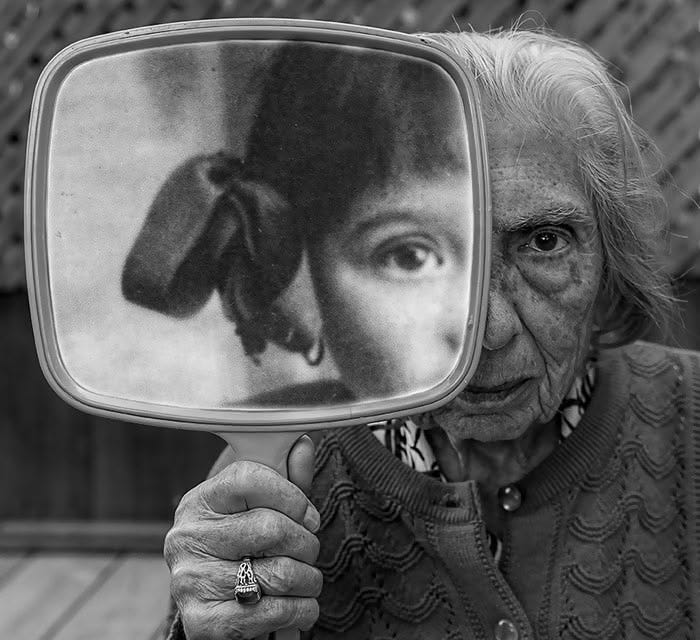
The science of cellular rejuvenation is advancing fast. The philosophical questions are just getting started.
Last week, I came across an insight that blew my mind: An embryo appears to reverse its biological clock early in development.
I learned this on the podcast episode Can We Reverse Aging? from The Daily, and whether or not you follow longevity science, I promise it’s worth the 30-minute listen.
The episode looks at cellular rejuvenation—the idea that we can take a cell that has aged and make it function like a younger version of itself.
Here’s why scientists think it’s possible: Every time a baby is made, something remarkable happens. I don’t mean childbirth, though that is, indeed, a miracle. This happens shortly after a sperm joins an egg. Essentially, all sperm cells carry the signs of aging inherited from the man who created those sperm. Those are then inherited by the embryo that forms. If those aging markers accumulated unchecked, our species would eventually go extinct! So nature, as it does, invented a fix: shortly after a sperm joins an egg, the embryo sheds those aging markers, and it actually gets younger(!) — briefly — before it resets to ground zero and begins aging forward.
So basically, life begins with a small reversal of aging.
Scientists have spent decades trying to harness that same process. And a breakthrough came from a researcher named Shinya Yamanaka. In 2006, he discovered that by applying genes highly expressed in embryos to aged cells, he could revert them to their embryonic state. He won the Nobel Prize for it. Since then, the research that has followed, led separately by scientists Juan Carlos Izpisúa Belmonte and David Sinclair, eventually led to FDA-approved human trials using a refined version of this approach to reverse blindness caused by glaucoma. Suggesting we are closer than ever to real treatments that don’t just slow aging, but partially reverse it. It sounds nuts because mice trials rarely translate into human trials, which is exactly why you’ve got to take a listen.
This is where the philosophical questions start to roll in.
If humans can live 50, 100, or 200 more years, how does that change our world? Does the retirement age increase, making sure people hold jobs for at least a century? Does innovation — the freshness, the disruption, the new perspectives that come from new people — slow to a crawl? What happens to Social Security systems designed for a different lifespan? Can the people driving and funding this research guarantee quality of life and not just length? And, perhaps the most relevant question here: if death is what gives life its meaning and urgency, what happens when we push the thought of death far enough away that it starts to disappear from view?
These are questions philosophers, economists, scientists, and all of us should be thinking about right now.
The comment section of The Daily’s episode was as thought-provoking as the episode itself. One listener put it simply: “Our obsession with longevity is a testament to our spiritual impoverishment.” Another shared: “I would only opt for reverse aging if we could reverse death. If a loved one died, I would not want to grieve for the next couple of hundred years.”
Both of those comments point to the same thing.
Most of us don’t actually want to live forever. We want to live better and well — fully present, physically capable, mentally sharp — for as long as we’re here. Those are different goals. That’s healthspan vs. lifespan.
Our society has been so focused on not dying that we forgot to ask what living well actually looks like. But don’t we already know how? Less screen time and more time in nature. Less time alone and more time in community. Eating whole foods and not junk food. Getting enough sleep and water. And I’ll add one more: contemplating death, because it will help clarify what matters to you and how you want to spend your time while you’re alive.
Whether or not cellular rejuvenation becomes widely available, the pressure to reverse, optimize, and biohack our way through life is getting louder.
The question of how we age gracefully — in a world that’s increasingly telling us we don’t have to — still lingers.
I want to age well just as much as the next person. But I also don’t want to spend the years I have fighting the ones I’ve lived. There’s a difference between aging well and being at war with aging.
Does the idea of extending the average human lifespan excite you or unsettle you — and what does your answer reveal about how you’re living right now?
— Maura
In short, I liked the post. But to say only that would be an understatement.
Just to provoke a little: don’t we know that we aren’t living, but dying every day? Our life had a beginning and will have a physical end. There is no doubt about that, for now. Knowing how to live well the life we began when we were born is a serious matter. And, I must admit, science can certainly help us live life to its physical end. Death is another matter. Science bears the responsibility of knowing how to preserve quality whilst we live.