

We seek immortality, but all we get is a moment.
What does it mean to strive for greatness in a world where everything (and everyone) will one day be forgotten?


Hi Mortals,
I’ve been under the weather and haven’t had the energy to write a new post this week. So, today, in honor of the Super Bowl and the Winter Olympics, I’m sharing a piece from last year that I’ve lightly updated.
I hope you enjoy.
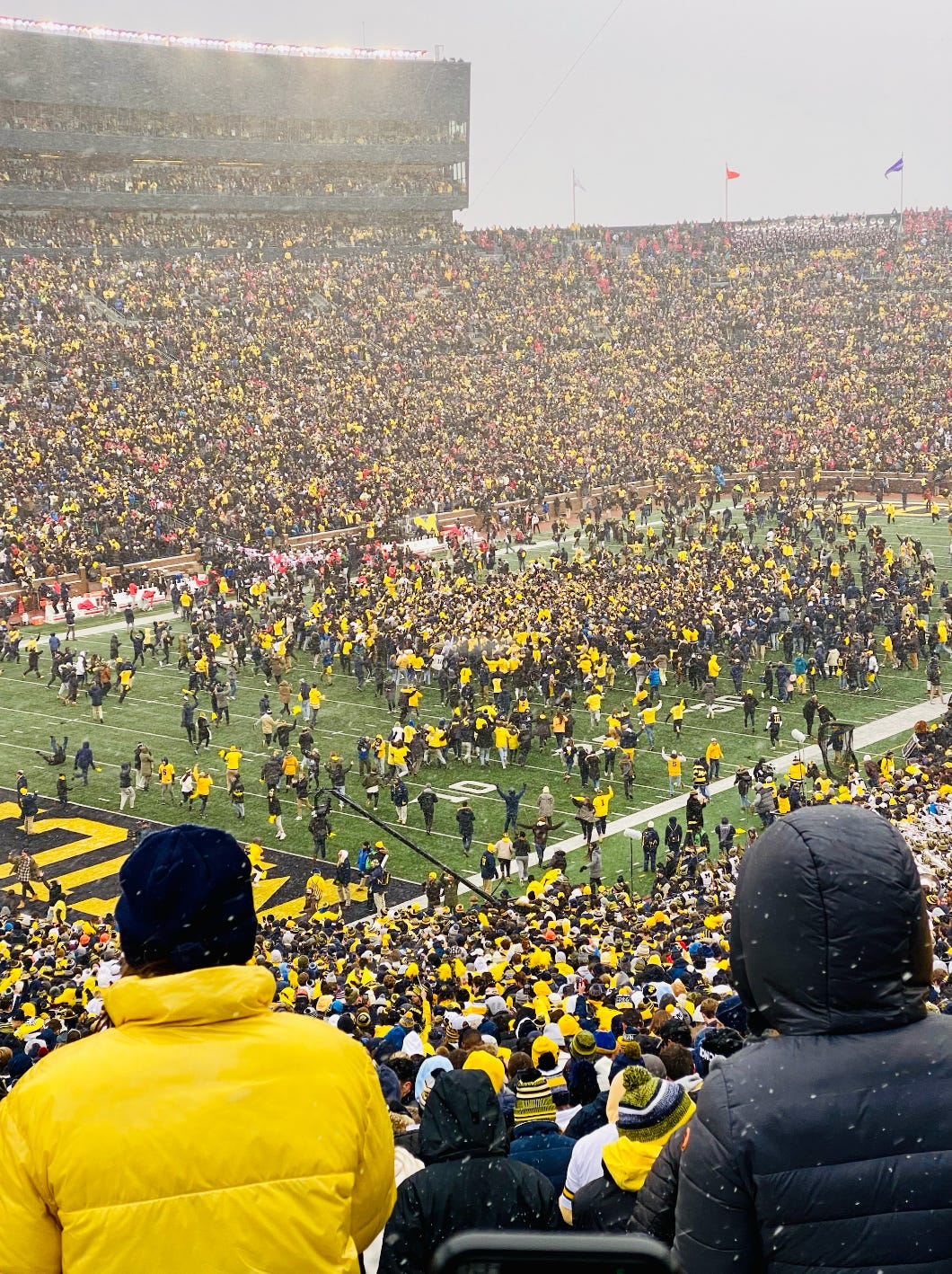
Since the dawn of civilization, humans have gathered in arenas to witness spectacle, struggle, and the pursuit of glory. From the Colosseum in ancient Rome and the sacred ball courts of the Aztecs, to medieval tournaments and the early rise of organized sport, to the Super Bowl and even the trading floors of Wall Street, we’re naturally drawn to competition and the stories of those who strive for greatness—because these moments mirror life itself. Struggle is the most universal human experience, and to exist is to compete for survival.
Whether on the battlefield, in the workplace, or on the playing field, we sacrifice and struggle to rise to the top. In earlier civilizations, this was in pursuit of immortality—the belief that a hero or warrior could literally become a god. Today, it’s often in pursuit of legacy—the hope that our efforts will stand the test of time and outlive us.
Tonight, more than 100 million people will tune in for our modern Colosseum: The Super Bowl. And over the next few weeks, billions will tune into the 2026 Winter Olympics.
Across these different arenas—whether padded in turf or on ice and snow—something primal is unfolding. These athletes aren’t just playing a game, they are stepping into a tradition as old as civilization itself—a test of mindset, strength, skill, and endurance in pursuit of something greater.
History tells us that only the greatest will be remembered, but even they will eventually fade into obscurity. This is the paradox of ambition: we chase greatness, knowing that one day it might all be forgotten, but still we play.
Why we play
Forever, we’ve asked what truly drives human beings. Is it pleasure, power, purpose or something else entirely? The answers vary, but they all orbit the same central truth: we are creatures painfully aware of our own mortality, and we will always seek to make sense of why we’re here.
Anthropologist and author Ernest Becker called this drive symbolic immortality—the desire to create a legacy that will live beyond us. He theorized that symbolic immortality helps humans cope with existential anxiety—the innate fear that arises when we confront the reality of death, and question whether the lives we are living mean anything.
Sigmund Freud argued that the fundamental drive of human beings is pleasure. His contemporary, Alfred Adler, disagreed—he believed our core need is for significance and that we strive for superiority and validation to overcome feelings of inferiority and to prove our worth. Our accomplishments serve as armor against the fear that we are small, insignificant, and forgettable.
So we push our bodies and minds to their limits. We chase wealth, power, and recognition. We seek symbolic immortality by trying to etch our names into history—breaking records, achieving titles, winning awards, writing books, building companies, becoming “someone”—anything that tells us we mattered, that we were worthy, that someone somewhere will remember us when we’re gone.
Whether it’s professional sports, a business venture, or an art project, none of us are immune to this. The playing field is just a metaphor for life’s bigger arena. We convince ourselves that if we just work harder, sacrifice more, and win big enough, maybe—just maybe—we will be happier and create a legacy that matters.
But no matter how much we achieve, time remains our only undefeated opponent. And beneath it all, whether we realize it or not, we are fighting against the one thing we cannot defeat: death.
The modern colosseum
Football, like any high-stakes competition, is a microcosm of how symbolic immortality plays out. Penn State historian Garrett Fagan argues that football is a direct descendant of the Roman Colosseum games. Both are violent spectacles, turn athletes into heroes, and reward the strongest while discarding the broken.
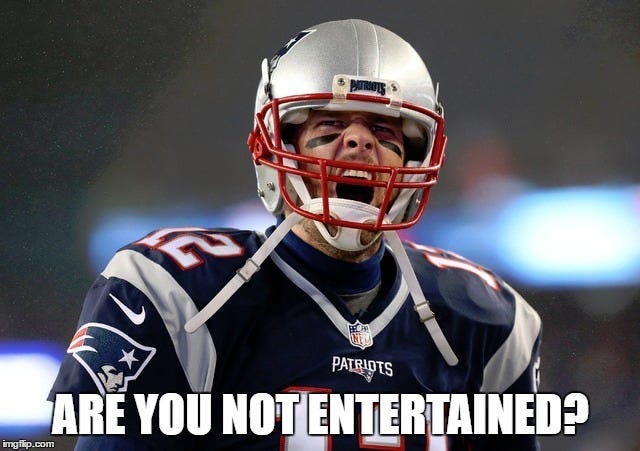
However, most gladiators were forced to fight, whereas football players choose to walk on the field. But how much of a choice is it when many players come from lower-income backgrounds, where sports are their best, sometimes only, path to a better life? Much like the Roman gladiators (many of whom were prisoners, slaves, or desperate free men), athletes often risk their health, identity, and future for a shot at greatness. And in the end, the game moves on, while their bodies and minds often do not.
We may not fight with swords or shields anymore, but in our own ways, we all play this game, and the same instincts are occurring: we have a deep psychological need to prove ourselves so we chase what we think will bring us significance,hoping for the promise that “success” will finally make us enough.
What we trade for success
Friedrich Nietzsche argued that greatness demands suffering, and to “become who you are,” you must be willing to endure. Athletes, more than anyone, embody this idea—they sacrifice their bodies in the pursuit of an ideal. They push through broken bones, concussions, and surgeries because they accept that suffering is the price of greatness.
Take Tom Brady, for example, arguably the greatest quarterback to ever play Football, and whose relentless pursuit of self-mastery was legendary. His diet (the TB12 Method), training, and mindset were all built to conquer time itself.
“My goal is to play forever,” Brady once said.
And for a while, it seemed like he might. He won seven Super Bowls, outlasted generations of quarterbacks, and redefined what longevity in sports could look like. But even the greatest can’t outrun time. Brady left the New England Patriots after 20 seasons to continue his pursuit in Tampa Bay with the Buccaneers. He was still chasing something even after reaching the top, and it cost him his marriage. In the end, he learned what all greats eventually do: the game always moves on without you.
And Brady’s not alone. There are countless others. Take Alpine ski legend Lindsey Vonn, who came out of retirement and even chose to race today at the Olympics despite a ruptured ACL from a World Cup crash nine days ago, only to suffer a devastating fall early in her downhill run in Italy this morning (unrelated to her ACL injury) and had to be airlifted off the course. We’re wishing her a speedy recovery.
Everyone chasing greatness pays a price. The question is: what are you willing to pay?
This is the fundamental struggle of all high achievers: we want permanence in a world of impermanence. The pursuit of building something great always feels urgent—like the next milestone will finally make it all mean something. But no matter how high you climb, the moment passes, and a new goal takes its place.
This is what Becker called the denial of death: the idea that all human ambition is, at its core, a way to distract ourselves from the reality of our own impermanence. We work, we strive, we build, we compete, we push past our limits—not just to win, but to prove, if only for a moment, that we were here and we mattered.
The arrival fallacy
Rarely does winning give us more than momentary satisfaction. We forget that it’s the journey (not the destination) that gives life meaning. We tell ourselves that fulfillment lies in the next promotion, the next championship, the next great achievement. But the moment we “arrive,” we realize the arrival wasn’t what we were searching for after all.
As writer Rob Henderson put it: “The scariest thing about getting everything you want is realizing it doesn’t make you happy.”
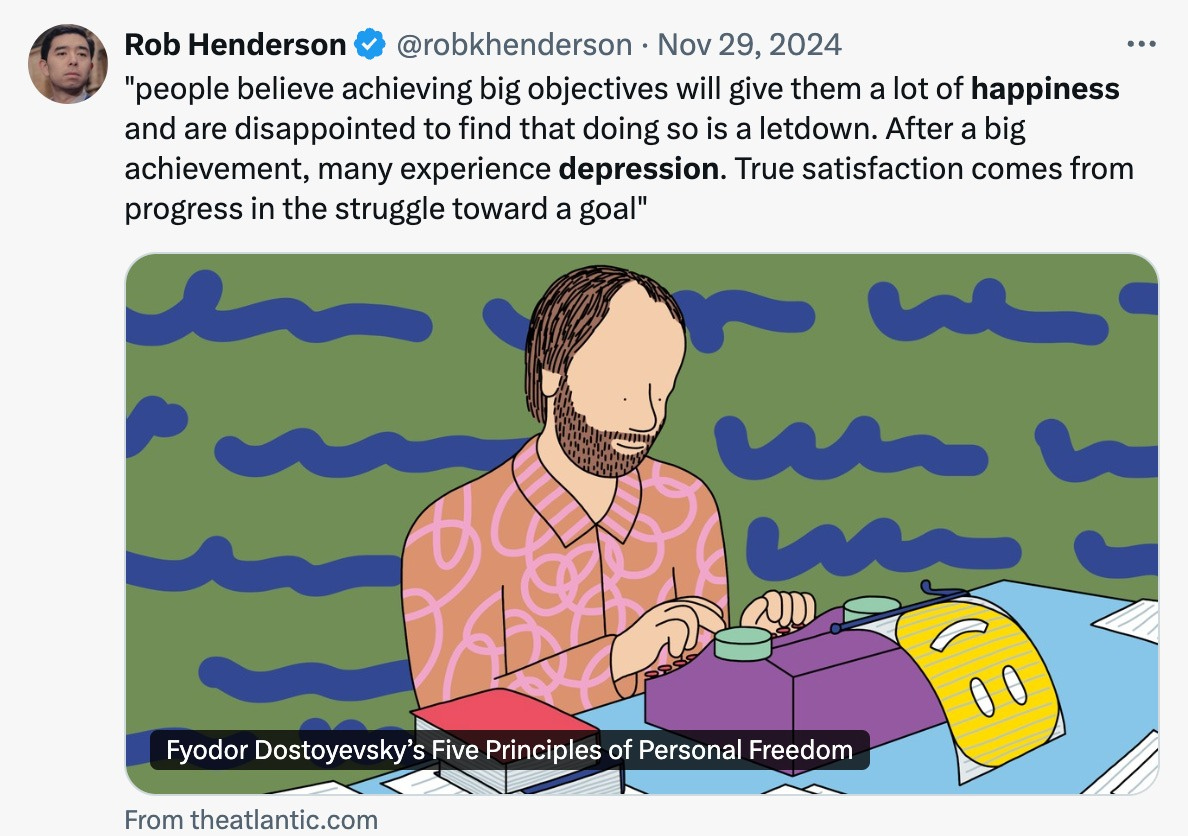
This is what’s known as the “arrival fallacy”: the idea that happiness exists just beyond the next victory, only to disappear the moment we reach it.
This doesn’t just apply to athletes, of course. High achievers in every field—CEOs, artists, musicians, academics, politicians—burn themselves out chasing something they think will finally make them happy. But time and again, we see that reaching the top doesn’t lead to fulfillment.
What if we’re not meant to arrive? What if the struggle itself—the striving, the effort, the process—is the whole point?
We chase greatness as if it will last forever. Yet, everything we build—our careers, reputations, achievements, even our relationships—are fragile, and can slip away the moment the next season begins.
A different way to play
Every game and every pursuit, no matter how glorious, eventually reaches its final chapter. The CEO steps down, the artist finishes their last masterpiece, the teacher retires. This is true for all of us.
So instead of chasing some future version of success, what if we focused on showing up fully in the life we have now? Because, in the end, legacy isn’t about what we accomplish—it’s how we play the game.
Our jobs, achievements, and status won’t last, but how we live, treat others, and embody our values will. Success isn’t just what you achieve–it’s about what you refuse to sacrifice along the way.
I’m reminded of one of my favorite quotes by Maya Angelou:
“I’ve learned that people will forget what you said, people will forget what you did, but people will never forget how you made them feel.”
At the end of the day, maybe the point is simply to play—to step into the arena of life, give it everything you’ve got, and embrace the struggle, knowing that one day it will end.
– Maura
All moments are fleeting but how about those moments effects on the soul? Or shall I say ‘souls’?
Note: I kinda like soul better because it calls for the concept of ‘all is one and one is all’.
The hard part about embracing impermanence in my opinion is that it makes it difficult to truly be 100% invested in anything. You can be present in moments but realizing that all moments are fleeting, might leave one bracing for the end in the midst of whatever journey they’re in. Sometimes fixating on a destination is the only thing that keeps us going down the path.
Great write up. Thanks for sharing this.